
Manifest 2026 brought more than 10,000 supply chain and logistics leaders to Las Vegas from February 9–11 — and if there was one unmistakable theme throughout the event, it was this:
The supply chain is no longer a back-office function. It’s a strategic lever.
Across keynotes, startup showcases, and executive conversations, leaders signaled a shift from reactive supply chain management to proactive ecosystem design — powered by data, digital infrastructure, and increasingly, AI.
But beyond the booths and buzzwords, the most meaningful discussions centered around a harder operational truth: volatility and excess inventory are here to stay.
Here’s what stood out.
1. AI Is Everywhere — but Execution Is the Real Differentiator
AI dominated the show floor. From forecasting engines to warehouse robotics to predictive logistics platforms, nearly every corner of Manifest featured some form of machine intelligence.
But beneath the hype, a more grounded theme emerged in conversations with enterprise brands: AI is only as valuable as the operational decisions it improves.
Many supply chain leaders acknowledged the promise of AI-driven forecasting and planning, but also emphasized how difficult accurate demand planning remains, especially in volatile environments.
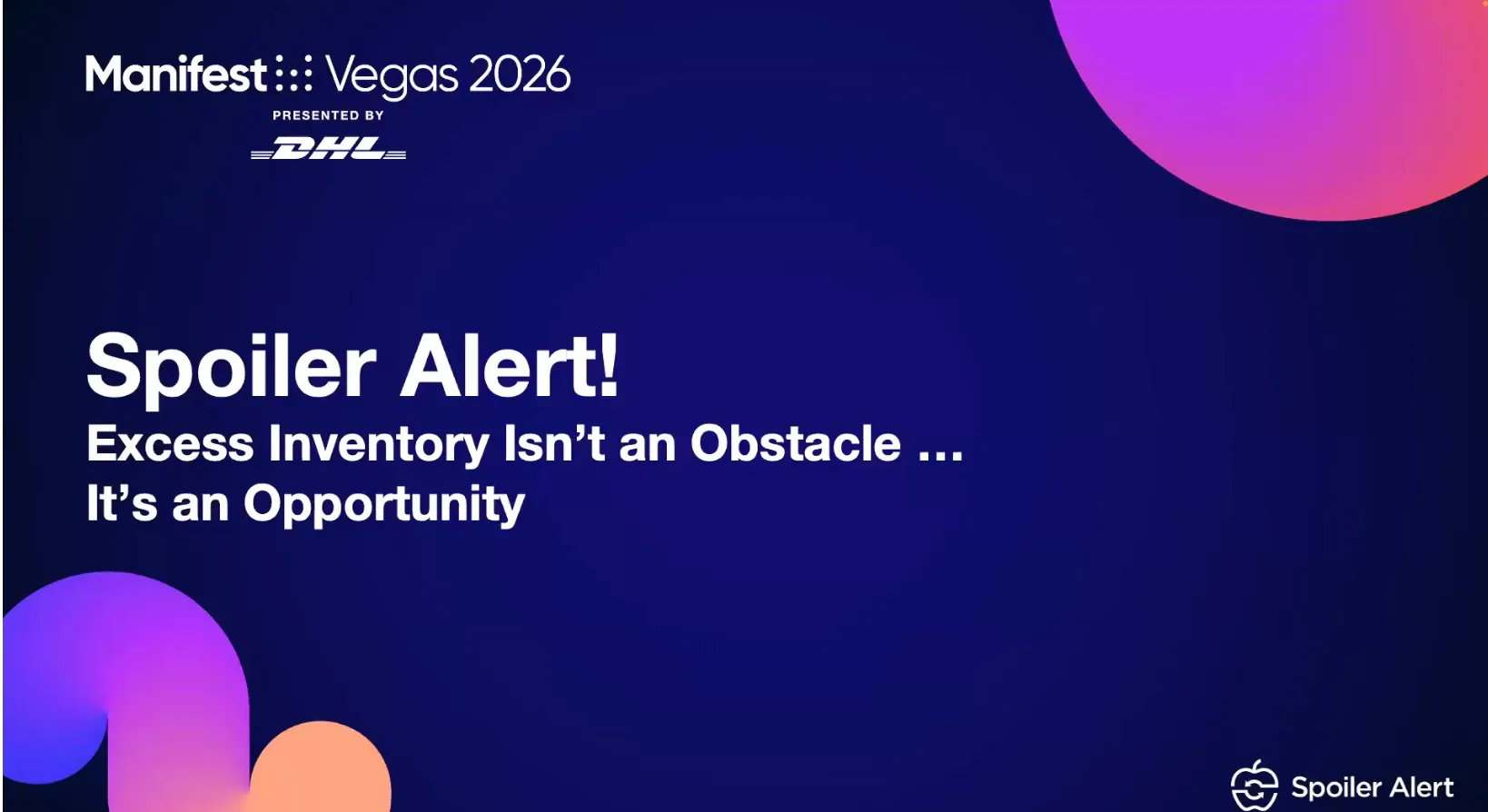
During his Innovation Stage talk, “Spoiler Alert! Excess Inventory Isn’t an Obstacle… It’s an Opportunity,” Spoiler Alert CEO and Co-Founder Ricky Ashenfelter addressed a challenge nearly every supply chain leader in the room has faced:
Slow-moving, obsolete, or at-risk inventory sitting somewhere in the network.
Softening demand. Promotions underperforming. Forecasts missing the mark. Innovation SKUs failing to gain traction.
These aren’t anomalies. They are structural realities of modern CPG operations.
The difference between leaders and laggards isn’t whether excess happens. It’s how intelligently it’s managed.
With a strategic liquidation strategy and data-driven intelligence, CPG brands can rest easy knowing they have a smart way to manage their inevitable — albeit unpredictable — excess inventory. Solutions like Spoiler Alert iQ don’t only surface liquidation data, but translate surplus and supply chain signals into clear, actionable opportunities. In an environment flooded with dashboards, the competitive advantage goes to organizations that can quickly and confidently operationalize insights.
The challenge isn’t simply deploying smarter tools. It’s aligning systems, data inputs, and cross-functional teams to act on what those tools reveal. The next phase of AI adoption won’t be about experimentation. It will be about operations.
2. The Value Channel is Growing Strategically
Another key theme from the main stage and to side conversations was the evolution of the value channel.
As Ricky highlighted in his talk, excess inventory isn’t something brands should treat as an embarrassment. It’s a byproduct of innovation, seasonality, reformulations, retailer dating requirements, and volatile consumer demand.
Meanwhile, today’s consumer is increasingly value-conscious and less brand loyal.
Off-price and opportunistic retailers — Grocery Outlet, Ollie’s, TJX, and others — are not dumping grounds. They are disciplined operators delivering 25–75% discounts in treasure-hunt environments that drive foot traffic and brand discovery.
• For brands, the opportunity isn’t simply “clearing product.” It’s:
• Aligning pricing with remaining shelf life
• Matching inventory batches with the right buyer profile
• Diversifying selling channels to reduce program risk
• Building a network of trusted, flexible trading partners
The brands seeing the strongest outcomes aren’t asking, “Who will take this?”
They’re asking, “Who is this specific batch right for?”
That shift — from reactive disposal to strategic channel orchestration — is a supply chain innovation story in itself.
3. The Digital Ecosystem Is Replacing the Linear Supply Chain
Another consistent theme was the move away from linear supply chain thinking toward a connected digital ecosystem.
Brands are no longer evaluating vendors in isolation. They’re thinking about interoperability, shared data visibility, and how partners fit into a broader network. Structuring partnerships across supply chains has become both more complex and more strategic.
This evolution is forcing organizations to ask sharper questions:
• Where does data live?
• Who owns decision-making?
• How do we protect brand and margin while improving agility?
The supply chain is becoming less about moving goods efficiently and more about orchestrating intelligence across nodes.
4. Brand and Supply Chain Are No Longer Separate Conversations
One of the more subtle — but significant — signals from Manifest was the growing intersection between supply chain operations and brand strategy.
As global networks expand and alternative channels mature, leaders are increasingly aware that supply chain decisions directly influence brand perception, channel control, and long-term equity.
Efficiency and protection are no longer competing priorities. They must coexist.
Looking Ahead: The Supply Chain as Strategy
As the event came to a close, what became clear was that meaningful progress still comes from focused, high-quality conversations with the right enterprise leaders — even in large-scale settings. While the ecosystem of startups, 3PLs, and solution providers continues to grow rapidly, the brands driving the most thoughtful conversations are those taking a long-term view of their supply chain transformation.
Manifest 2026 reinforced a powerful reality: supply chain leaders are stepping into a new era of accountability and opportunity.
The organizations that will win in this environment are those that:
• Integrate AI thoughtfully, not performatively
• Build digital ecosystems instead of isolated stacks
• Treat supply chain decisions as brand decisions
• Prioritize strategic partnerships over transactional vendor relationships
The future of supply chain isn’t just faster or cheaper.
It’s smarter, more connected, and more strategic.
And the conversation is only getting started.
The Spoiler Alert team is still on the road and is looking forward to continuing to uncover insights while hosting meaningful conversations at multiple events in the near-future. Don’t miss us at Annual Meat Conference, Expo West, and more!
And if you’re not attending those conferences or are interested in connecting with us before you’re in-person at an upcoming event — book an intro call with a Spoiler Alert expert, today. We’ll talk through exactly how we can help turn strategic liquidation into a meaningful and impactful step in your supply chain.