How PepsiCo's competitive liquidation program drove double digit cost recovery and increased sell-through rate.
For years, PepsiCo's excess inventory across North America moved through one outside broker working from one weekly spreadsheet. Here is what changed when the beverage business instituted a managed program with competitive bidding and brand controls its own team could set.
About
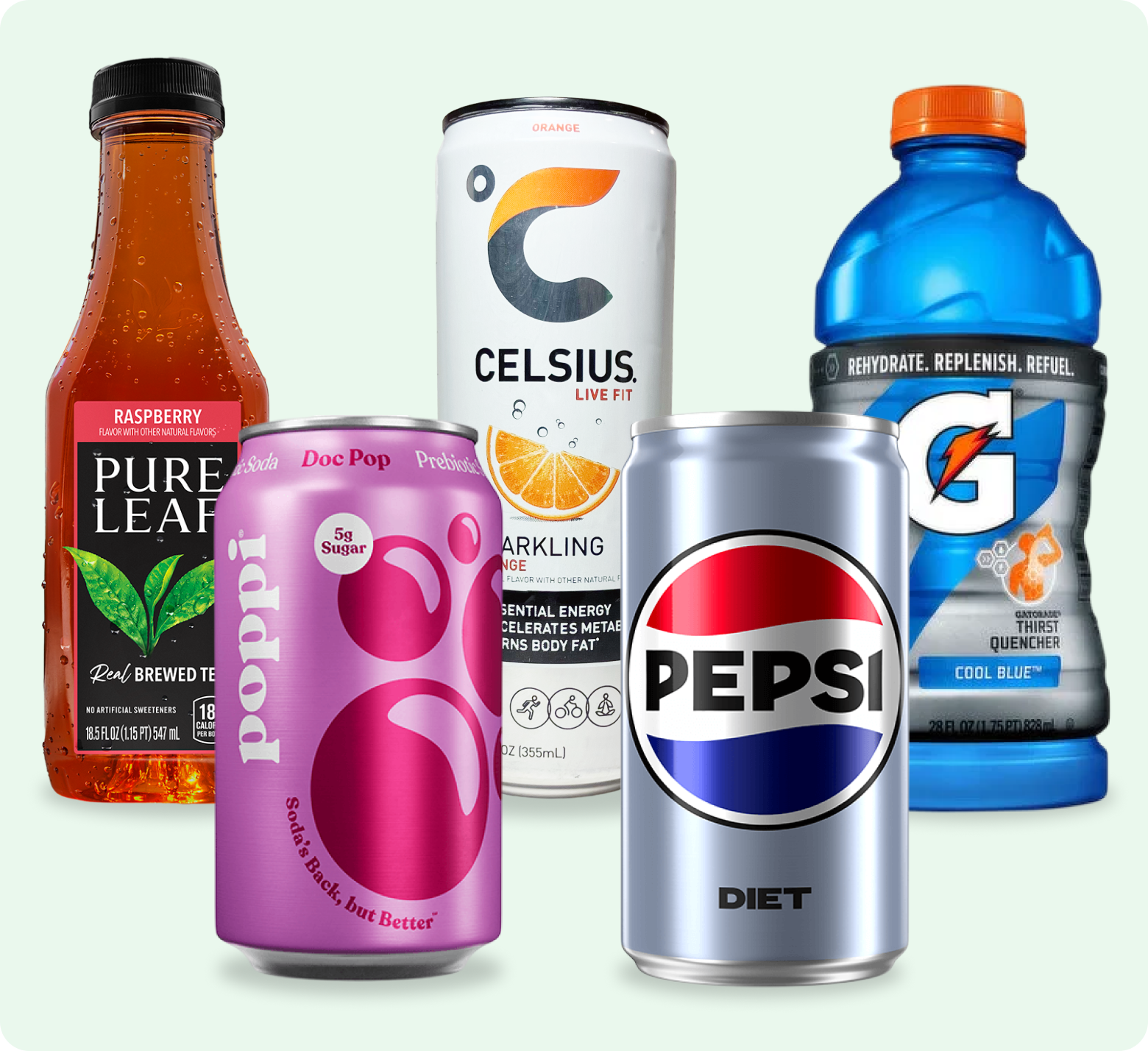
PepsiCo Beverages North America is the beverage arm of PepsiCo, with a portfolio spanning Gatorade, Tropicana, Pure Leaf, Starbucks ready-to-drink, and poppi. Those brands reach shelves through two distinct distribution systems, direct-store-delivery and warehouse, which means excess surfaces in two places, on two clocks, under two sets of owners.
Industry
RTD Beverage
Challenge
Everything ran through one person, once a week
PepsiCo, one of the world’s largest food and beverage giants, handled excess inventory through a single outside broker.
Responsible for more than forty manufacturing sites that span a vast ready-to-drink beverage catalog, that broker would receive a weekly spreadsheet, work her own network, and return another spreadsheet showing what had sold.
"It was very laborious and manual. It was very spreadsheet-driven, and wasn’t always timely," said Matthew Reed, Supply Chain Director at PepsiCo. Deciding what belonged on the list in the first place fell to the distribution centers, pulling sixteen people into reporting work that had nothing to do with picking, packing, and shipping.
All of their eggs rested in one broker basket, and that liability cascaded into more problems.
No visibility into buyers, and none into performance
PepsiCo could see the invoice and the ship-to address, though the identity of whoever put the product on a shelf belonged to the broker. "I don't think we knew the buyer," Reed said. "We just knew the customer."
Those blind spots were cumbersome to work around, to say the least. Offers and outcomes lived in email threads and spreadsheets, so the team could total up what had sold at the end of a cycle without ever knowing what had been offered to begin with. That made it nearly impossible to measure cost recovery against a reliable baseline, and thus equally difficult to operationalize and improve a process that was a black box.
Buyers had learned to wait
Two internal programs handled discounted inventory on separate timelines at separate prices, and roughly eighty percent of the buyers sat on both lists. Those buyers noticed.
"We’d offer the product at closeout retailers, and they knew our game," Reed said. "They're like, all right, well, we can wait another month and come back for a better deal."
And waiting cost PepsiCo more than shelf life. With it came carrying costs, the opportunity costs of pulling sales teams’ time away from national accounts, and the disposal costs of holding it too long to sell.
The Solution
From ad hoc, manual liquidation to a managed process
PepsiCo initially found Spoiler Alert to address cost-cutting efforts. The weekly spreadsheet became a managed sales cycle. Inventory now comes out of PepsiCo's own systems rather than sixteen distribution centers filing reports by hand, and the buyers who receive it are working against a set deadline and competitively bid for inventory. Offers arrive ranked against the reserve price PepsiCo sets, so whoever is awarding can read the whole field in one screen.
Guardrails the brand team sets
While buyers bidding competitively drives higher prices, competition to an undefined set of buyers would have been a nonstarter. "We don't want to cannibalize our everyday business," said one PepsiCo sales lead.
Visibility into where inventory goes was initially one of the biggest pain points PepsiCo set out to address. With Spoiler Alert, PepsiCo got both: every buyer clears PepsiCo's own credit and setup process before seeing a single offering, and PepsiCo’s custom guardrails govern which approved buyers see which products.
Those guardrails allowed the team to scale up their liquidation processes without worry of product landing in the wrong places.
Someone reading the file before it publishes
A Spoiler Alert liquidation expert has advised the account since day one, and the return on that shows up in the things that never became problems. A Starbucks ready-to-drink item once came through priced anywhere from under ten dollars to fifty. Another file, this one for Gatorade equipment, arrived carrying prices that had already been discounted once, which would have pushed listings out below their pricing floor. Both got caught before a buyer ever saw them, and they were adjusted accordingly to maximize the cost recovery and sell through for each.
Results
Since partnering with Spoiler Alert, PepsiCo recovered 52% more costs in the first six months for their excess inventory. Better yet, this was paired with a sell-through increase of 7% over the same stretch.
Increasing both cost recovery and sell-through rate at once indicates the product found the right buyer at the right price.
Where one broker once carried the entire catalog to a network PepsiCo could not see, 26 vetted buyers now compete cycle after cycle against reserve prices and channel guardrails PepsiCo dictates, and PepsiCo continues to iterate and improve the program with each cycle – with a trusted advisor from Spoiler Alert validating each decision.
.png)