How Oatly Met Profit, Brand, and Sustainability Goals All At Once
When product didn’t sell in time, Oatly needed an answer that worked for both the business and the planet.
About
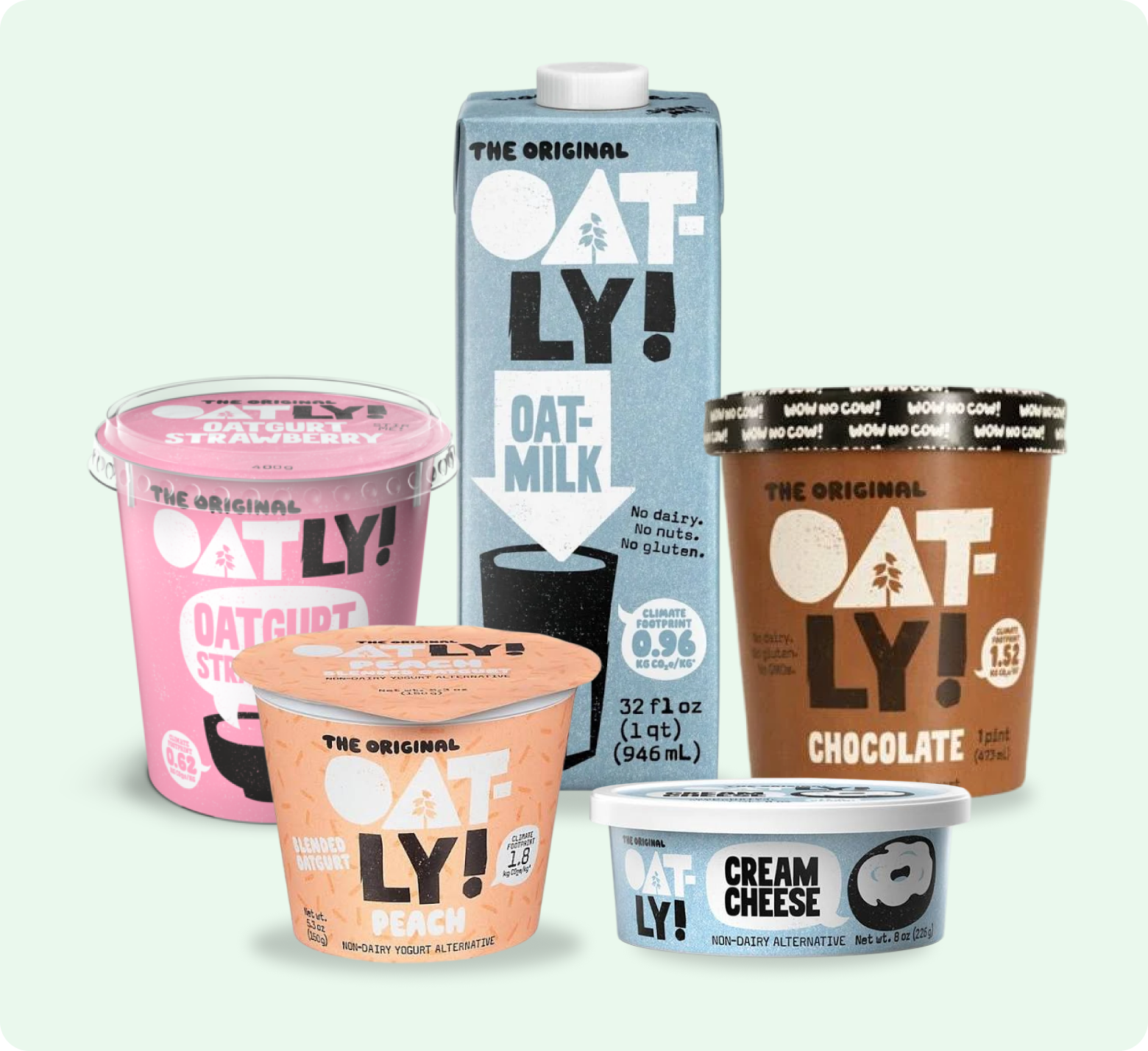
Oatly is the world's original and largest oat drink company, built on a simple proposition: swapping dairy for oats is better for your body and better for the planet. Its North American lineup spans chilled and shelf-stable oat milk, barista editions, creamers, and frozen desserts, sold through grocery, retail, and a fast-growing food service and coffee channel. The company's stated mission is to convert dairy drinkers to plant-based alternatives and shrink the carbon footprint of what people pour in their coffee.
Industry
Food & Beverage
What rapid growth leaves behind
One of the most unavoidable patterns we see across working with top CPG manufacturers — whether you run an emerging brand with a handful of SKUs or a multinational with thousands — is that excess scales with growth. The more products you launch, the more accounts you chase, and the more flavors you bet on, the more certain it becomes that some of it won't move the way you plan.
Oatly, one of the most prominent plant-based milk manufacturers in the industry, is no exception. The tricky part of growth-fueled excess for them, however, is that a pallet of unsold oat milk costs Oatly twice: once on the P&L, and again on the eco-friendly principles they abide by.
As a sustainability-first brand, they sell oat milk on the philosophy that their oat-based product are a people and planet friendly choice. Trucking their own product to disposal is fundamentally against that philosophy.
And as far as disposal goes, Oatly goes to great lengths — opting for donation, then animal feed, then waste-to-energy, then recycling, before resorting to landfills. And while the landfill sits at the very bottom of that ladder, excess is unavoidable for a company that has doubled its revenue in the last five years. How can they keep scaling their brand without worrying about what gets left behind?
Challenge
For a long time, the answer to aging inventory at Oatly ran through an inbox.
Malorie Carr, Customer Service Specialist on Oatly's supply chain team, maintains the work of moving excess product into the secondary channel. Before Oatly had a system for it, liquidation was exactly as tedious as it might seem. "It was a lot of copy and pasting tables from Excel spreadsheets into emails to several different people… going back and forth and back and forth," she said.
Worse than the manual labor was the blind spot it created. When a whole operation lives in scattered spreadsheets and email chains, nobody can see the forest from the trees. Oatly’s supply chain couldn't easily track how much had been offered, how much had actually moved, or what it recovered.
That opacity mattered well beyond Malorie’s desk as well, because the leaders who cared about this product weren't only in customer service. Finance wanted to see recovered margin, and sustainability and brand wanted visibility into waste diverted from landfill.
As an emerging company, their secondary buyer pool was also thin. When innovation SKUs and expansion created overstock, limited buyer capacity also limited what they could sell through, leaving money on the table and obsolete product accruing carrying costs in warehouses.
Solution
Once Oatly discovered Spoiler Alert at a trade show, their decision process was fairly quick. "It was kind of a no-brainer in terms of the time savings and the efficiency," Malorie said.
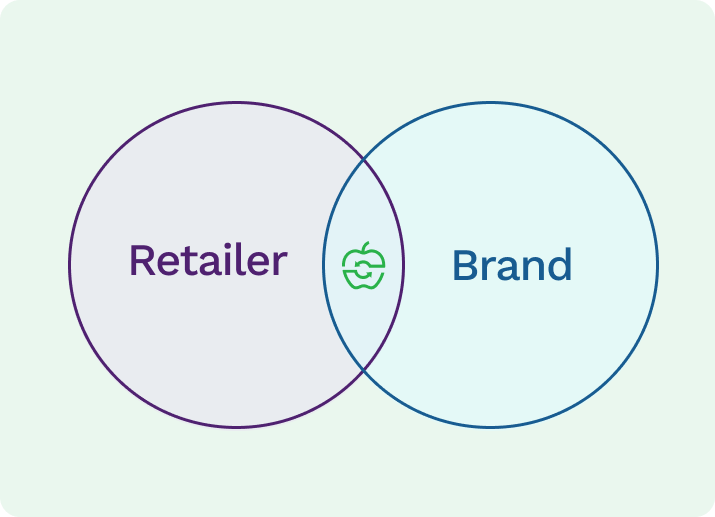
A major factor in that decision is how Spoiler Alert didn't upend Oatly’s process. It simply replaced the manual parts, paired Oatly’s team with one of our liquidation experts to validate every decision, and connected them with a wider set of strategic buyer relationships.
The email-and-spreadsheet grind became a weekly cycle Malorie could run in a couple of hours. Their original buyers moved onto the platform without friction, and the network widened from there to include vetted off-price and wholesale buyers that were a complete match for Oatly’s brand and product needs.
Better yet, for the first time, every offer, award, and sale sat in one place, which turned previously ad-hoc tasks into data and insights that executives can act on.
"One of the biggest things Spoiler Alert has changed for us has been visibility of the whole secondary sales process," Malorie said. "It was hard to track down how much had been offered, how much had been earned, what offers we received back — how much actually moved. Having it all in one spot is amazing." That single view is what let Malorie pull finance and sustainability into the same conversation and show them, with numbers, how their goals intersected.
Results
In Oatly’s first year on the platform, they increased cost recovery by 51%.
That cost recovery gain didn’t come at the expense of sell-through, either, which rose 9%, indicating they didn’t need to resort to steep discounts and force volume out the door.
The sustainability team keeps its own scoreboard, measured in liters: in the first six months on the platform, Oatly kept roughly 820,000 liters of product from being wasted. With each carton of oat milk that avoids the landfill, there’s a shopper who might try Oatly for the first time, love it, and become a new customer.
That user trial is another unsung advantage of optimizing liquidation programs – a dynamic we broke down with Lactalis’ own supply chain team.
Oatly has spent years building its sustainability story — earlier this year, Oatly announced it is the first food and beverage brand to qualify as a Climate Solutions Company. With Spoiler Alert, Oatly can continue to be a sustainability leader converting new customers to its planet and people friendly products, with trust that the leftovers will also land somewhere meaningful.