Press Release
Danone North America and Spoiler Alert Share Strong Results in their Battle Against Waste


A practical framework for pairing closeout programs with a disciplined everyday assortment - turning off-price and value retailers from opportunistic buyers into long-term growth partners.
Learn more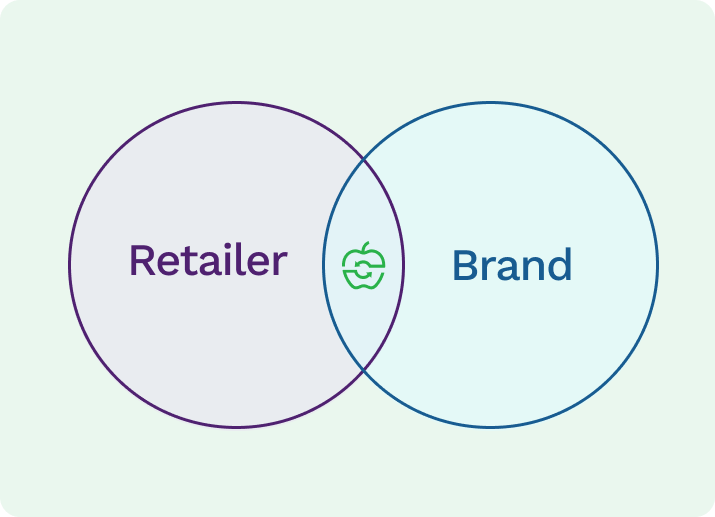


Excess inventory has become a permanent fixture in retail. While off-price channels provide a critical outlet for surplus product, they often result in transactional, opportunistic relationships between brands and retailers that limit their collective long-term growth.
At the same time, brands are under increasing pressure to build more predictable, everyday retail partnerships - relationships that provide consistent demand, shelf presence, and incremental consumer access.
Let’s discuss a proven strategy for accomplishing both.
By intentionally pairing closeout programs with a thoughtfully constructed everyday assortment, brands can transform relationships with off-price and value retailers from ad-hoc, transactional buyers into long-term partners.
Drawing on real-world execution in our experience working with leading CPGs and retailers, this is a practical framework for aligning pricing, assortment, and incentives in a way that benefits both sides.
Closeout and liquidation programs solve an important problem: they help brands recover value from short-dated, excess, or discontinued inventory. However, closeout-only relationships with select retailers often come with limitations:
Retailers, especially off-price and value-focused chains, face their own challenge: consumers expect availability and consistency, even in non-traditional retail formats. A rotating assortment of opportunistic closeouts can undermine that promise.
This results in a mismatch. Brands want predictability, retailers want reliability, and closeouts alone deliver neither.
From reactive inventory liquidation to proactive merchandising partnership
The first step in building an everyday business alongside closeouts is not pricing or product - it’s merchandising alignment. Rather than leading with “what inventory do you need?”, successful brands start with a merchandising conversation:
In one successful example, a brand met with an off-price retailer to deeply understand how the retailer balanced discovery with dependable value. Through this process, it became clear that while closeouts were attractive, the retailer wanted to dedicate shelf space to a reliable portfolio of products that could always be available to consumers.
In another successful example, a brand used category management data to inform these conversations - showing retailers where their shoppers are buying products elsewhere (category leakage) and demonstrating which SKUs would strengthen their assortment. This data-driven approach transformed the conversation from "here's what we want to sell you" to "here's what your customers are looking for that you're not carrying." That expressed interest - not the brand’s ambition - became the foundation for everyday business.
Small, focused, and dependable
Everyday business does not require a full catalog rollout. In fact, it works best when it doesn’t. Leading brands collaborate with retailers to identify a tight portfolio - anywhere from 5 to 20 SKUs - that:
This “everyday anchor” offers stability to the relationship. Closeouts remain an important complement to that. For retailers, this ensures consistent shelf presence. For brands, it simplifies planning, forecasting, and production.
Store format matters
Different retailer formats unlock different everyday opportunities:
Understanding the retailer's format and merchandising approach helps identify the right everyday strategy - not whether one exists, but which model creates the most value for both sides.
Margin discipline in service of long-term growth
One of the most critical - and challenging - elements of building an everyday business with an off-price retailer is pricing. To succeed, everyday assortments must be priced competitively with peer retailers or coupled with greater trade promotion spend. In practice, this can result in higher sales but at a lower blended margin.
In the world of closeouts, good things do not typically come for those who wait. From analyzing $6B in excess inventory transaction data on Spoiler Alert, we see that cost recovery plummets as shelf life deteriorates, regardless of temperature class.
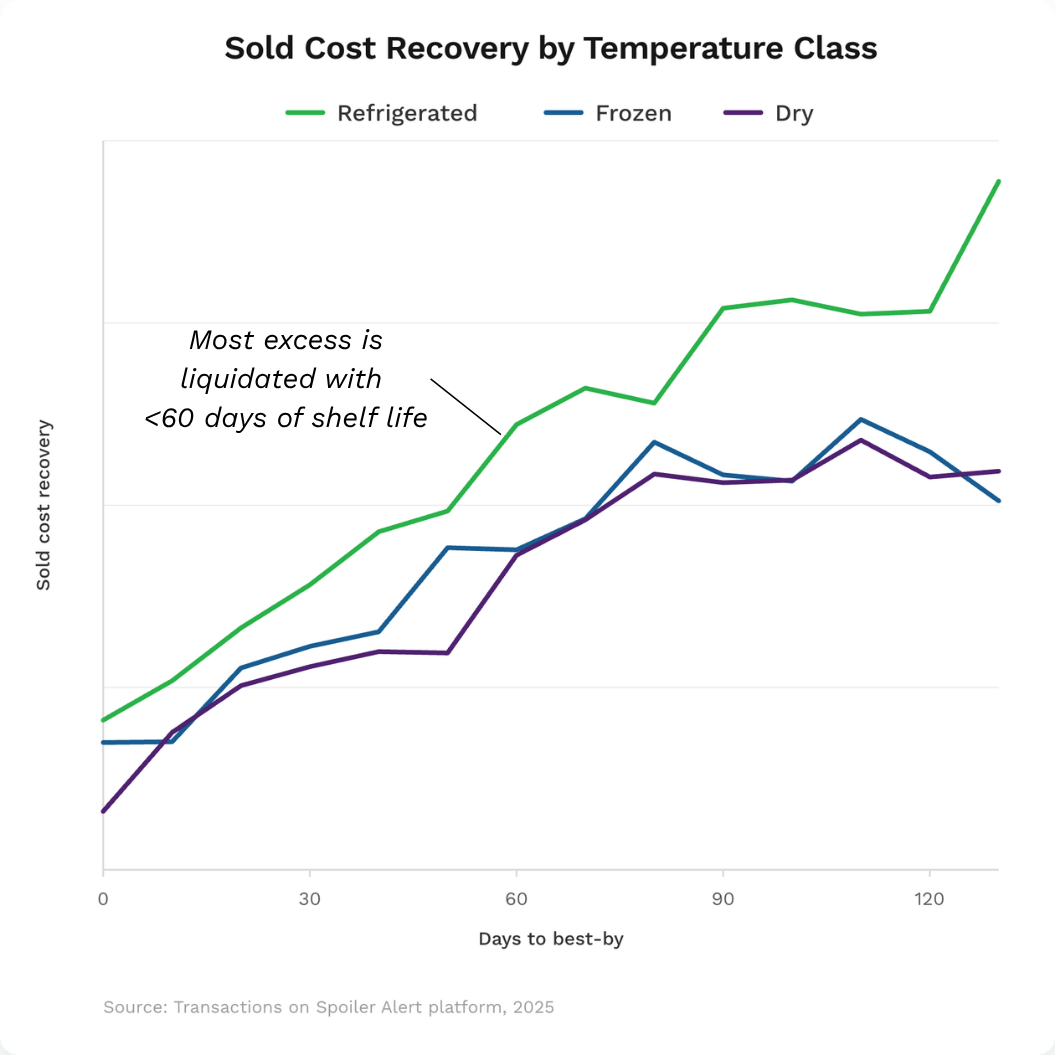
What we can learn is that brands that are proactive in their offerings to value retailers view lower margin as not a concession, but as a strategic investment:
Brands work closely with finance and category management teams to establish pricing floors that protect brand equity and channel relationships while enabling incremental sales. This collaborative approach ensures everyday pricing creates genuine value for retailers without disrupting existing distribution.
Importantly, this pricing flexibility is applied selectively - only to the everyday anchor assortment, not the entire portfolio.
Gives and gets in coupling everyday and closeout programs
In effective models, brands often couple everyday programs with preferential access and improved economics on closeouts. A common structure includes:
This creates a balanced exchange:
What we often see is that brands who follow this approach, maintaining at least 3 strategic and active relationships with retailers, reap 80% higher cost recovery on their excess inventory versus brands who don’t.
Making the Math Work: Margin Blending
Retailers and brands evaluate these hybrid relationships based on blended margin across everyday and closeout purchases. Successful partnerships model this explicitly: a retailer might earn lower margin on the everyday assortment, but higher margin on closeouts. Together, these balance to achieve a target margin.
This framing helps retailers and brands see the total value of the relationship rather than evaluating everyday and closeout in isolation.
Preventing the relationship from becoming too opportunistic
Without structure and intentionality, retailers may revert to purchasing only closeouts - undermining the everyday business the brand invested in. To prevent this, brands should consider establishing clear guardrails, such as:
These guardrails create transparency, accountability, and long-term trust.
For the retailer: dependable availability on a core set, sharp pricing, early access to closeout inventory, and a calmer sourcing operation. For the brand: predictable demand against a defined SKU set, better closeout economics, and denser truck lane utilization.
There's one more benefit for brands, one which often runs underrated: trial. Value retail is now where the average American shopper - and even the high-income shopper - defaults to. And 83% of consumers who discover a brand through a discount channel repurchase it at full price.
Every anchor placement and every closeout pallet potentially puts a brand’s product in a new cart at a price that the shopper can’t say no to. Run well, this strategy creates accretive margin and customer acquisition at the same time.
If you’re looking to try this model, consider taking a phased approach:
At Spoiler Alert, we’re here to advise you on all of the above, while offering a platform that can play a critical role by:
Closeouts will always be part of retail, but they don’t have to define it. The most resilient brands use excess inventory not just to recover value, but to build leverage, trust, and long-term partnerships. By pairing closeouts with a disciplined everyday strategy, brands can create retail relationships that are both profitable today and sustainable tomorrow.
Don’t miss our latest Stories Stay Inspired!